Can You Actually Make $100 a Day Playing Slots? Here's What the Math Says
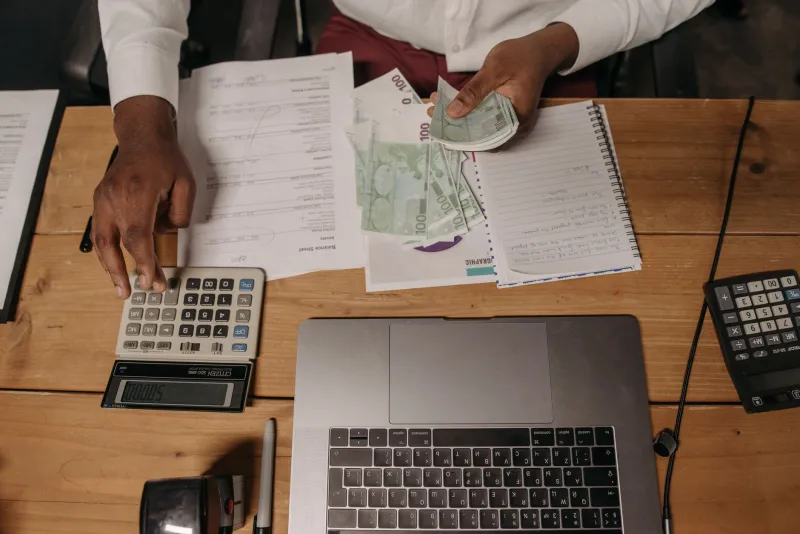
Every week, someone posts in a slots forum or Reddit thread claiming they've cracked the code — $100 a day, regular as clockwork, just from spinning reels. It's a seductive idea. And like most seductive ideas, it deserves a hard look before you buy in.
Let's be direct: slot machines are not income streams. But that doesn't mean understanding the numbers is pointless. In fact, the players who come closest to sustainable returns are almost always the ones who've done exactly that — studied the math, respected the variance, and built a system around realistic expectations rather than wishful thinking.
So let's walk through what the data actually tells us.
The House Edge Never Takes a Day Off
Every slot game comes built with a Return to Player (RTP) percentage — typically somewhere between 92% and 97% for reputable online titles. That number tells you how much of every dollar wagered the machine returns to players over millions of spins.
Here's the part that trips people up: RTP is a long-run average, not a session guarantee. A 96% RTP slot doesn't hand back $0.96 every time you bet a dollar. It means that across an enormous sample size — we're talking millions of spins — the aggregate payout settles near that figure.
For a single session, the variance swings wildly. You might be up 200% in an hour. You might lose your stake in twenty minutes. Both outcomes are statistically normal. This unpredictability is exactly what makes chasing a fixed daily target so difficult.
If you're betting $2 per spin at 500 spins per hour on a 96% RTP game, your expected loss per hour is roughly $40. To net $100 in profit, you'd need to beat the expected outcome by $140 in that same window. That's not impossible — variance makes it happen regularly — but it's not repeatable on demand.
Why Most Players Fail the Consistency Test
The dream of $100 a day collapses for most people for a handful of predictable reasons.
Bankroll is too thin. To weather the natural downswings of high-variance slots, you need a cushion that most casual players don't have. Running $200 into a volatile game and expecting daily profit is like starting a road trip on fumes. One bad stretch wipes you out before the math can work in your favor.
Session goals are backward. A lot of players chase losses instead of locking in wins. They set a profit target but have no loss limit. One rough hour becomes a four-hour grind that eats everything they made the previous three days.
Game selection ignores volatility. High-volatility slots offer bigger jackpots but brutal dry spells. Low-volatility games pay more frequently but in smaller amounts. Players chasing $100 daily often gravitate toward high-volatility titles — which are actually the worst fit for consistent, modest returns.
Confirmation bias distorts the record. People remember the sessions where they hit $150 and forget the six days they lost $80 each. Without a written log, it's nearly impossible to know whether you're actually profitable or just lucky in your memory.
What the Rare Successful Players Actually Do
Here's the interesting part. There are players — a small but real subset — who do maintain something approaching consistent returns over extended periods. They're not winning every session, but their monthly ledger trends positive more often than not. What separates them?
They define success differently. Instead of targeting a fixed dollar amount daily, they set a percentage-based win goal tied to their session bankroll. Win 20-30% of your session stake, walk away. This adjusts naturally to variance and keeps expectations grounded.
They play lower-volatility games deliberately. Games with frequent small pays — often branded as "low risk" or featuring high base-game hit rates — give players more spins per dollar and smoother session curves. Think games in the 94-96% RTP range with medium-to-low volatility ratings. You won't hit life-changing jackpots, but you'll stay in the game longer.
They treat it like a budget line, not income. The players with the best long-term records budget a fixed monthly recreational amount and try to extend it as far as possible. Any net-positive month is a win. This reframe removes the pressure that causes reckless chasing.
They log everything. Seriously — a simple spreadsheet tracking date, game, starting balance, ending balance, session length, and notes on what they played. After three to six months, patterns emerge. Which games performed better? Which session lengths were most profitable? Data beats gut feeling every time.
The Bankroll Math You Need to Know
If you genuinely want to give yourself the best shot at consistent small profits, here's a rough framework:
- Session bankroll: At minimum, 100x your average bet. If you're spinning $1 per round, bring $100 to the session. For $2 spins, you want $200.
- Daily stop-loss: Cap your losses at 50% of your session bankroll. Hit that number, close the game.
- Win target: Aim for 25-30% of session bankroll. Hit $125-$130 on a $100 buy-in? That's a winning session. Log it and stop.
- Monthly tracking: Measure success monthly, not daily. Daily variance is too noisy to mean anything.
Using this structure, a disciplined player might realistically expect to win roughly 40-45% of sessions over time — which, if win sessions are slightly larger than loss sessions, can produce a modest positive monthly result. Not $100 a day. But not a money pit either.
The Honest Bottom Line
Slots will never be a reliable income source. The math is built against it, and the variance makes consistency statistically brutal. Anyone telling you otherwise is either misremembering their results or selling something.
But "you can't reliably profit" is different from "strategy doesn't matter." Game selection, bankroll management, session discipline, and honest record-keeping genuinely move the needle. They won't turn slots into a paycheck, but they can turn an expensive hobby into a more controlled, occasionally rewarding one.
The $100-a-day dream? It's mostly a fantasy. The $100-a-month reality? With the right approach, that's actually within reach for players who treat the game with a little respect for the numbers.
And at ElSlots Casino, we'd rather you walk away with realistic expectations and a longer runway than blow your roll chasing a number that doesn't add up.